The decisive advantage of fiber lasers is obvious: With this solid-state laser, up to half the costs for operation and maintenance of the CNC laser cutting system can be saved. This fact is of course significant for the increasing popularity of this technology. Not only does this cutting technology require no gases for beam paths, but the laser sources are also highly effective: the nominal power of a 4 kW fiber laser (with a cooling device) is about 14 kW compared to 57 kW for a 4 kW-CO2 laser. Several maintenance costs of a carbon dioxide laser are also eliminated: the costs that depend on the life cycle of the discharge tubes or on the turbine in the cooling circuit of the laser gases or the vacuum pump. These account for an enormous part of the comparatively high maintenance costs of the CO2 laser.
There are, however, other physical characteristics that are advantageous to the fiber laser: Thanks to a beam wavelength that is ten times shorter, fiber lasers can achieve a smaller beam diameter (i.e. a higher energy density) at the center of the cutting head – thus thin material can be cut faster than with the CO2 laser. However, the thicker the material, the more this characteristic becomes a disadvantage due to the very thin kerf and a resulting risk of kerf filling with the discharge material (slag).
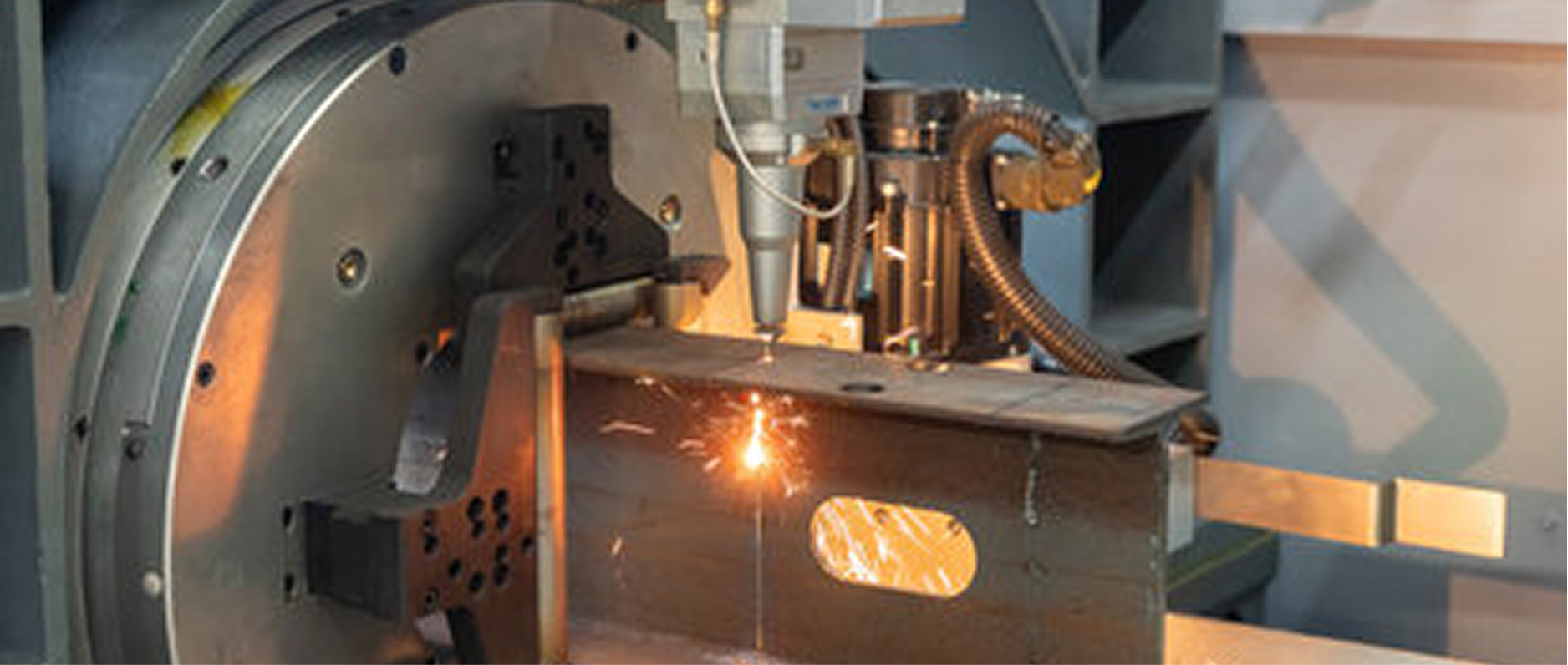
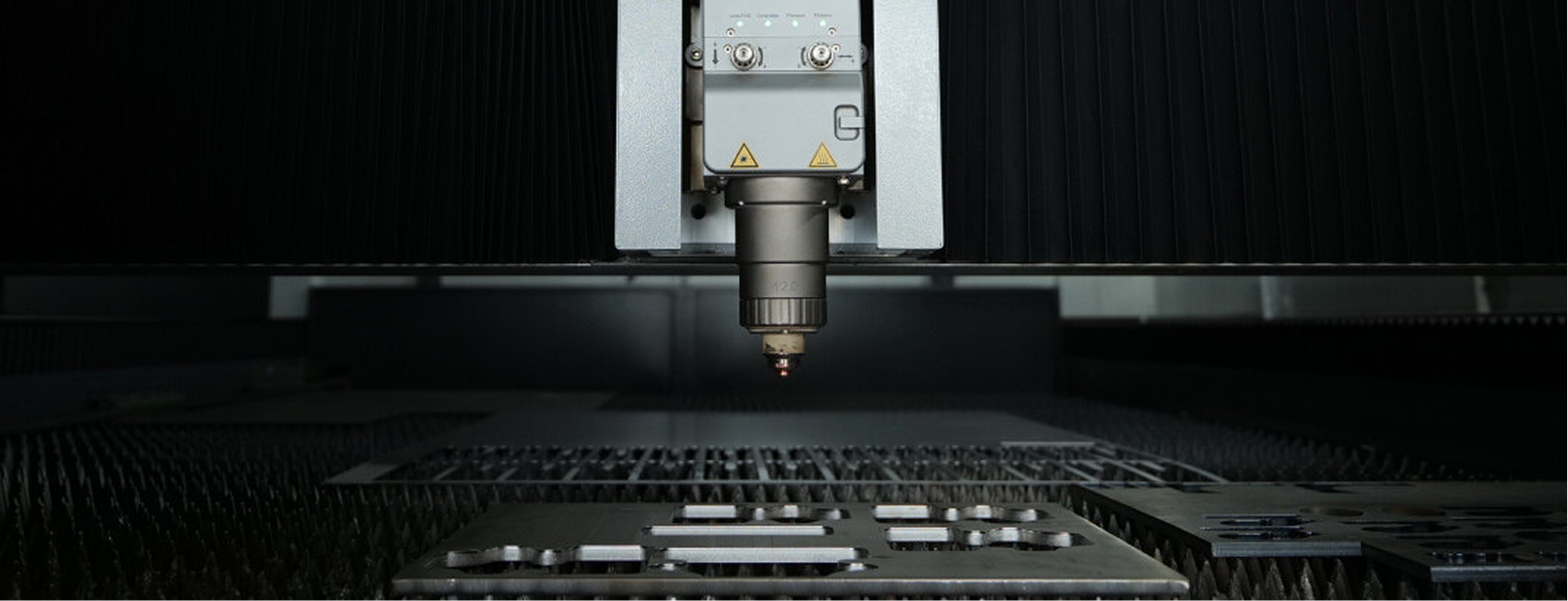
It is therefore necessary to have a larger focus diameter for cutting thicker materials. In the interest of industrial use, the laser cutting head should be able to change the focus diameter automatically – without the intervention of operating personnel, e.g. by manually changing lenses. In order to meet the versatile requirements of the market – i.e. to enable cutting over the entire material thickness range – ACCURL uses laser cutting heads from leading manufacturers such as Highyag, Precitec and Thermacut, tailored to the customers' needs, for maximum productivity in 2D cutting and bevel cutting of sheet metal, pipes or profiles. Due to the possible fully automatic control of focus position and focus diameter in combination with fast focus movements on the material, materials up to 50 mm thickness and significantly more can be processed with a single fiber laser, depending on the laser source. The cutting heads do not require changing the ocular lens – only the cleaning of the protective glass is part of the operator's tasks.
The quality of fiber laser technology has improved considerably in recent years. Depending on the laser power and material, modern fibre lasers can now cut materials up to 50 mm thick and far beyond. For example, a 20 kW laser enables the precise cutting of mild steel with a thickness of more than 40 mm, stainless steel up to 40 mm, aluminium up to 40 mm, brass up to 25 mm and copper up to 15 mm. However, the available laser power is constantly increasing.

%20(2).png)
.png)
.svg)



.png)


